MADE IN THE U.S.A. 


MADE IN THE U.S.A.
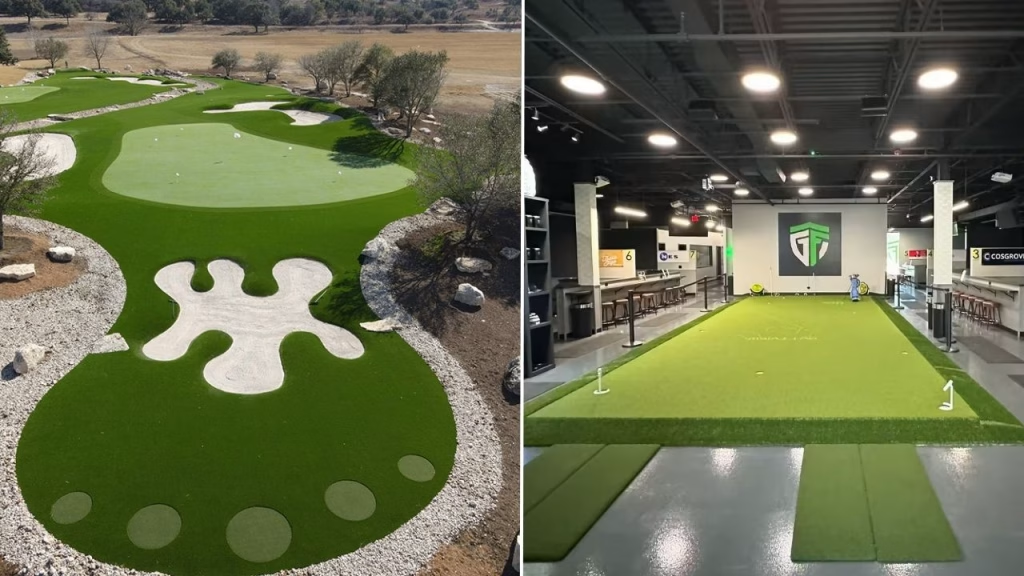
TL;DR: Choosing an indoor/outdoor putting green depends on your goals, space, and budget. This guide compares indoor putting green and outdoor setups to help you decide which option delivers the best performance, cost value, and overall golfing experience.
What you’ll learn:
If you’re considering adding a putting green to your home, one of the first decisions you’ll face is choosing between an indoor-outdoor putting green setup. Both options offer unique advantages, and the right choice depends on your space, budget, and how you want to practice.
From cost considerations to performance and design flexibility, this guide breaks down everything you need to know about indoor putting green and outdoor installations so you can create the ideal golfing environment.
Both indoor and outdoor greens use advanced synthetic turf to replicate real golf greens, but they differ in how they’re used and experienced.
An indoor putting green is typically installed in a controlled environment like a basement, office, or dedicated golf room. An outdoor green, on the other hand, becomes part of your landscape and integrates with your backyard design.
Each offers a unique golfing experience, and choosing between them depends on your priorities—convenience, realism, or versatility.
An indoor green provides unmatched convenience. You can practice anytime, regardless of weather, lighting, or season.
One of the biggest advantages of modern indoor setups is customization. A high-end indoor putting green with adjustable contours and slope allows golfers to simulate a wide range of putting scenarios.
This level of control makes indoor greens ideal for focused training. You can refine your stroke, work on alignment, and repeat drills without interruption.
When evaluating indoor putting green cost, several factors come into play, including size, complexity, and materials. Smaller installations can be relatively affordable, while larger custom designs with advanced features may require a higher investment.
However, indoor greens often require less site preparation compared to outdoor projects, which can help offset some costs.
Outdoor greens bring the feel of a real course directly into your backyard. They allow for larger layouts, more natural contours, and additional features like chipping areas or bunkers.
For homeowners who want a more immersive golfing experience, outdoor greens provide a closer match to actual course conditions.
The outdoor putting green cost varies depending on size, terrain, and design complexity. Homeowners often ask, how much does an outdoor putting green cost? The answer depends on factors like grading, drainage, and customization.
Larger greens with multiple features typically cost more but offer greater versatility and realism.
Both indoor and outdoor greens rely on high-quality synthetic putting greens to deliver consistent performance. However, the environment affects how the putting surface behaves.
Indoor greens provide a controlled setting, meaning speed and ball roll remain consistent. Outdoor greens, while still highly reliable, are influenced slightly by environmental factors like temperature and debris.
That said, modern golf turf is engineered to perform exceptionally well in both settings, offering realistic ball roll and durability.
Indoor greens are typically limited by available space, but they can still be highly customized. Features like adjustable slopes and multiple hole placements allow for a variety of practice scenarios.
Outdoor greens, however, offer greater design freedom. Homeowners can explore a wide range of outdoor putting green ideas, including multi-tiered layouts, chipping areas, and integrated landscaping.
This flexibility makes outdoor greens ideal for creating a full backyard golf environment.
One advantage shared by both options is low maintenance. Unlike natural grass, synthetic turf does not require mowing, watering, or fertilizing.
Indoor greens require minimal upkeep since they are protected from weather and debris. Outdoor greens may need occasional cleaning and brushing, but they are designed to withstand the elements.
In both cases, high-quality synthetic putting greens provide long-lasting performance with minimal effort.
Choosing between indoor and outdoor setups depends on how you want to practice.
Indoor greens are perfect for repetition and precision. They allow you to focus on your stroke and build consistency.
Outdoor greens offer a more dynamic environment. They allow you to practice longer putts, read slopes, and simulate real course conditions.
For many golfers, the ideal solution is a combination of both—an indoor outdoor putting green approach that provides flexibility and variety.
When comparing indoor putting green cost and outdoor putting green cost, it’s important to consider long-term value.
Indoor greens offer convenience and year-round usability, making them a great option for consistent practice.
Outdoor greens, while often requiring a larger investment, provide a more immersive experience and can enhance your property’s outdoor appeal.
Understanding your goals and how you plan to use the space will help you determine which option delivers the best return.
Whether you choose an indoor or outdoor setup, the goal is to create a space that enhances your golfing experience.
A well-designed putting green—whether inside or outside—allows you to practice more often, improve your skills, and enjoy the game in a new way.
With modern golf turf and advanced design options, homeowners have more flexibility than ever to create custom solutions that fit their needs.
The decision between an indoor putting green and an outdoor installation comes down to your lifestyle, space, and goals.
Indoor greens provide convenience and control, while outdoor greens offer realism and design flexibility. Both options use high-quality synthetic turf to deliver consistent performance and long-term durability.
By understanding the differences in cost, design, and functionality, you can choose the solution that best fits your needs—and take your practice to the next level.