MADE IN THE U.S.A. 


MADE IN THE U.S.A.
TL;DR:
A sand filled putting green and a short-pile green can both provide excellent practice conditions, but each differs in construction, infill requirements, maintenance, and playing characteristics.
This guide compares both options so golfers like you can better understand which turf system fits your space and practice goals.
Key points include:
Choosing the right putting green turf is one of the most important decisions when creating a custom practice area. Two popular options are sand-filled greens and short-pile greens.
While both use synthetic turf, they can differ significantly in construction, maintenance, appearance, ball response, and overall playing experience.
Understanding these differences can help homeowners and golfers like you select a surface that matches your practice goals and expectations. Accordingly, this comparison of different putting green turfs explores how sand-filled and short-pile systems work, the role infill plays, and what to consider before beginning a turf installation.
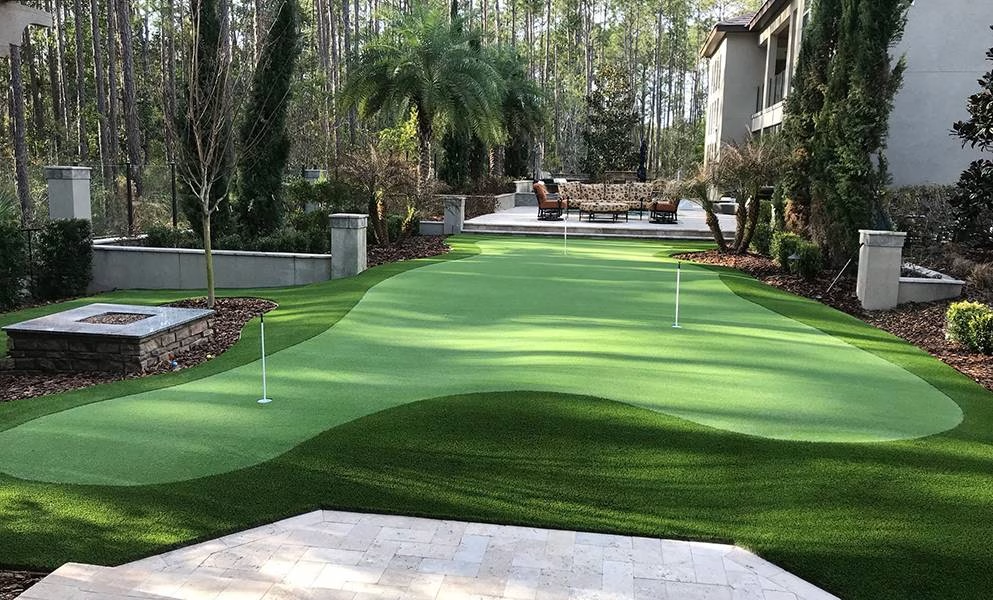
A sand filled putting green uses synthetic turf fibers supported by infill, typically carefully selected sand. The infill is distributed throughout the turf and worked between the fibers as part of the installation process.
Sand-filled greens are designed to create a realistic golf experience. Depending on the turf product, construction method, contours, and amount of infill, installers can influence factors such as green speed and ball response.
The infill also helps support the turf fibers while adding weight and stability to the system.
For golfers who want a custom backyard green with realistic contours and performance characteristics, a professionally designed sand-filled system can provide a highly versatile practice environment.
Artificial grass short pile refers to synthetic turf with relatively short fibers. In putting applications, this construction can create a smooth surface that allows the golf ball to travel without being slowed excessively by longer turf blades.
Some short-pile products are designed to function with minimal infill compared with traditional sand-filled systems. This can make them appealing for certain residential and indoor applications.
Short-pile greens are also frequently associated with straightforward putting practice. They can provide consistent conditions for golfers focused on stroke mechanics, alignment, and distance control.
The exact performance still depends heavily on the quality of the product and the construction beneath it. A premium short-pile surface installed over a carefully prepared base can perform very differently from an inexpensive roll of synthetic putting material.
A common question when comparing synthetic surfaces is: what is infill for artificial grass?
Infill is material placed between artificial turf fibers after the turf has been installed. Depending on the application, it can help provide stability, support turf blades, add ballast, and influence the feel of the finished surface.
There are several infill options, and different artificial turf applications have different requirements. Materials used for a lawn, pet area, athletic field, or putting green may not be the same.
For golf applications, infill selection is particularly important because changes to the surface can influence how the golf ball behaves.
Several infill materials are available for synthetic turf systems, but putting greens generally require materials selected specifically for golf performance.
Silica sand is commonly associated with putting green applications. The size, shape, quantity, and distribution of the sand can all affect the finished surface.
Golfers may also encounter products such as artificial grass rubber infill when researching synthetic turf. Rubber infill is commonly associated with certain athletic turf applications, where cushioning and impact absorption may be priorities. That does not automatically make it the right choice for a putting green.
The best infill for artificial putting green applications depends on the turf product, desired playing characteristics, construction method, and manufacturer specifications. A professional installer can match the infill system to the specific green instead of treating all artificial turf applications the same.
The playing surface is ultimately what matters most to a golfer.
Sand-filled systems can be designed to create realistic ball response and customized green speeds. The turf fibers and infill work together as part of the overall system, giving experienced installers control over important performance characteristics.
Short-pile greens can provide smooth, predictable putting conditions. Their relatively compact fibers make them particularly suitable for putting-focused practice spaces.
Neither category guarantees excellent performance on its own. Turf quality, base preparation, contours, drainage, infill, and installation technique all contribute to the final result.
A premium product installed incorrectly can produce disappointing results, while a properly engineered turf system can deliver consistent practice conditions for years.
Custom backyard greens often need more than a flat surface and a cup.
Golfers may want uphill putts, downhill putts, left-to-right breaks, right-to-left breaks, multiple pin locations, fringe areas, and chipping opportunities. These features require careful planning below and above the turf.
Sand-filled greens can provide substantial design flexibility for sophisticated outdoor installations. A skilled designer can combine the turf with carefully shaped contours to create a range of putting challenges.
Short-pile systems can also be customized, particularly when the underlying base has been professionally shaped. They may be especially attractive for smaller practice areas and indoor putting environments where simplicity and consistency are priorities.
Synthetic putting greens require considerably different care than natural grass greens, but they are not completely maintenance-free.
A sand-filled green may occasionally require brushing and attention to infill distribution. Leaves and other debris should also be removed so they do not interfere with the playing surface.
Short-pile greens need routine cleaning as well. Debris removal and occasional brushing can help preserve appearance and performance.
Usage also matters. A lightly used residential green will have different maintenance requirements from a commercial practice facility receiving frequent foot traffic.
Following the turf manufacturer’s maintenance recommendations can help protect the installation and maintain consistent performance.
The location of the green can influence the ideal turf choice.
Outdoor installations must account for drainage, weather, landscaping, temperature changes, and environmental debris. The complete construction system needs to manage these conditions while maintaining a consistent surface.
Indoor greens operate in a more controlled environment. A short-pile surface may work well in an indoor golf room where the primary goals are putting repetition, alignment, and distance control.
Large outdoor practice environments may benefit from the versatility of a sand-filled design, particularly when the project incorporates contours, fringe, chipping areas, or multiple cups.
The turf itself is only one component of a successful putting green.
Professional turf installation begins with evaluating the site and determining the appropriate design. Outdoor projects may require excavation, base preparation, compaction, drainage planning, contour shaping, turf placement, seaming, infill application, and finishing.
Even small imperfections beneath the surface can affect ball movement. Poorly constructed contours can also create unnatural breaks that reduce the value of practice.
Experienced putting green installers understand how all components work together. Rather than simply laying synthetic grass over a prepared area, they build a complete golf-specific system around the desired performance.
The right choice comes down to how the green will be used.
Golfers looking for a sophisticated outdoor practice environment with customized contours and realistic playing characteristics may prefer a sand filled putting green. Those creating a compact or indoor practice area may find that artificial grass short pile provides the consistency and simplicity they need.
Material quality should remain a priority in either case. Ask about turf construction, expected green speed, base preparation, drainage, infill, maintenance, and warranty before committing to a product.
Most importantly, evaluate the complete system rather than choosing turf based on appearance alone.
Celebrity Greens designs custom putting environments around the golfer, property, and desired playing experience. By considering the turf fibers, base construction, contours, infill materials, and installation process together, a custom green can provide a realistic and engaging place to practice at home.
The best putting green is not simply the one with the most expensive turf. It is the one designed as a complete system to deliver the performance, durability, and practice experience the golfer expects.