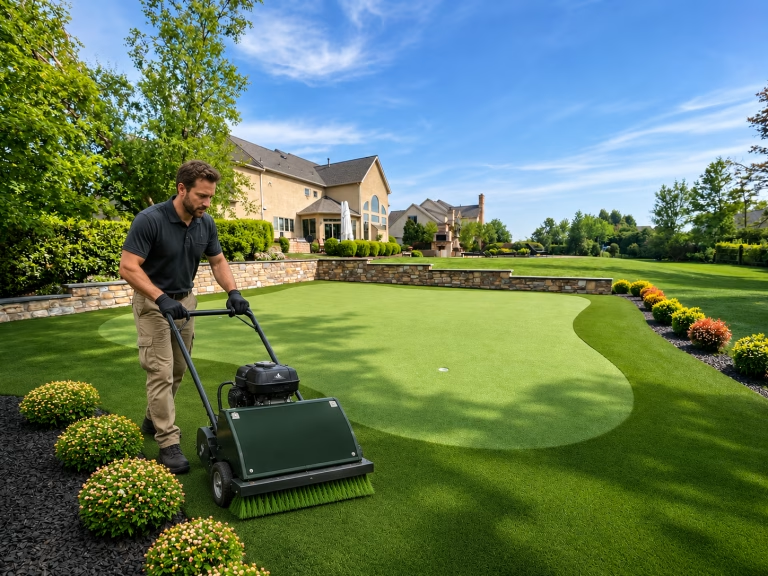

The Step-by-Step Guide to Backyard Putting Green Maintenance
TL;DR: Effective backyard putting green maintenance helps preserve the appearance, consistent ball roll, and long-term performance of synthetic golf turf. Routine care is relatively simple and focuses on keeping the surface clean, maintaining turf fibers and infill, and identifying small problems before they require more extensive repairs.
• Use a leaf blower or turf-safe rake to remove debris from the putting surface.
• Brush turf fibers periodically and clean spills promptly to maintain appearance and performance.
• Inspect putting green infill, cups, seams, edges, and contours for changes or damage.
• Avoid heavy or sharp objects that could affect the turf or underlying surface.
• Schedule professional maintenance or putting green repair when structural or performance issues appear.
A professionally installed backyard putting green gives you a convenient place to practice while adding a distinctive feature to your outdoor space. One of the biggest advantages of synthetic turf is that it requires significantly less routine care than natural grass. Still, a little backyard putting green maintenance can help preserve consistent ball roll, appearance, and performance.
Fortunately, maintaining synthetic golf turf doesn’t require mowing, fertilizing, or watering schedules. Follow these steps to keep your green ready for your next practice session.
Step 1: Remove Leaves and Surface Debris
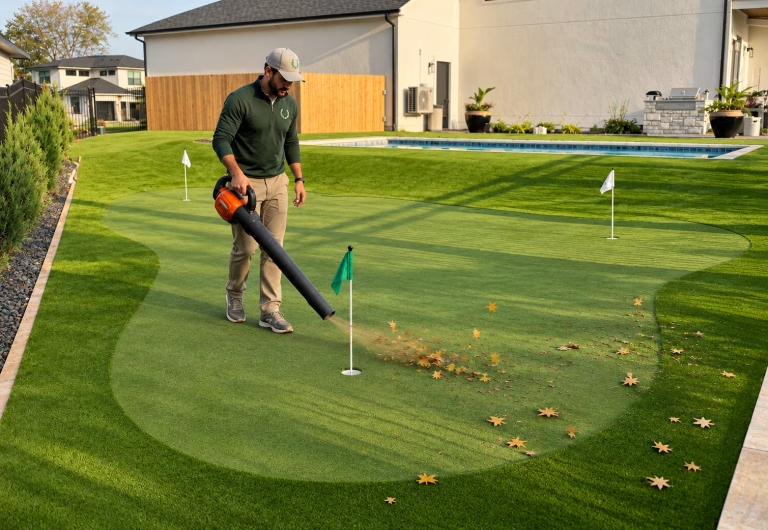
Routine putting green maintenance starts with keeping the surface clean. Leaves, twigs, dirt, and other materials can collect on the turf, particularly after storms or during fall.
Use a leaf blower on a low or moderate setting to remove debris without disturbing the turf or infill. A plastic rake or soft-bristled turf rake can also help with stubborn material.
Pay particular attention to edges, cups, fringe areas, and low points where leaves tend to accumulate.
Step 2: Brush the Turf Fibers
Regular foot traffic and golf practice can gradually cause turf fibers to lie flat, particularly in frequently used areas.
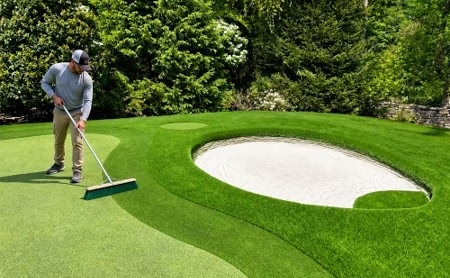
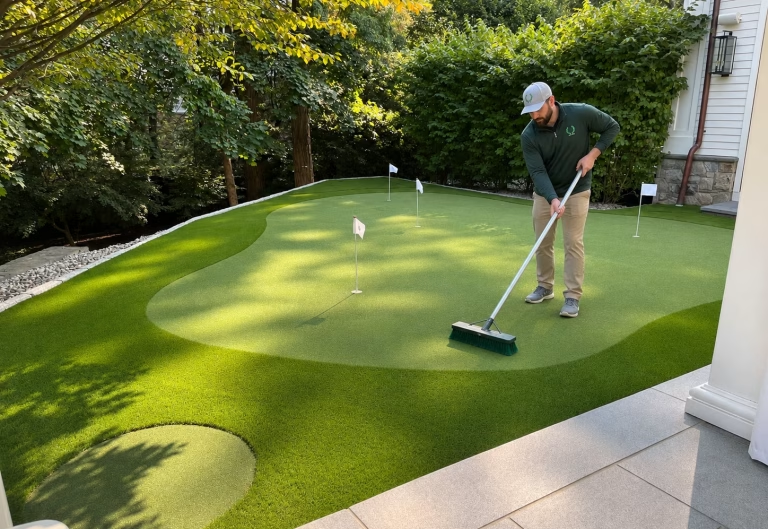
Occasional brushing helps restore the fibers and maintain the appearance of the green. Use a brush designed for synthetic turf and work against the direction in which the fibers are leaning.
Avoid metal-bristled brushes or aggressive tools that could damage the surface. This simple step is an important part of maintenance for artificial turf, particularly around heavily traveled sections of the green.
Step 3: Address Dirt and Spills
Synthetic putting greens occasionally need more than surface debris removal. Dirt, food, drinks, and other materials can leave residue on the turf.
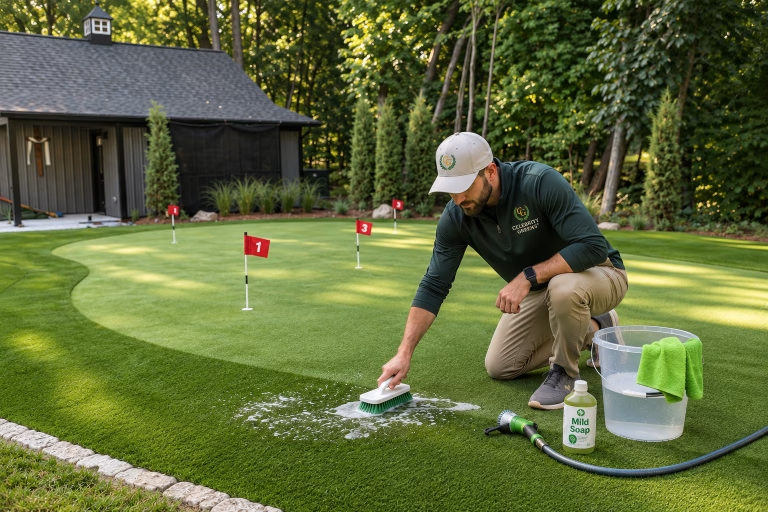
For most minor messes, rinse the affected area with clean water. Mild soap can be used when additional cleaning is necessary, followed by a thorough rinse.
Clean spills promptly rather than allowing residue to settle into the turf. Avoid harsh chemicals unless they are specifically approved for your turf product.
Step 4: Inspect Putting Green Infill
Putting green infill plays an important role in supporting the turf system and helping maintain consistent performance. Over time, infill can shift due to foot traffic, weather, cleaning, or repeated play.
Inspect the green periodically for areas that appear uneven or behave differently during play. A change in ball speed or surface response may indicate that the infill needs attention.
Professional installers can evaluate the surface and determine if additional infill, redistribution, or specialized grooming is appropriate. Adding too much material without understanding the turf system could alter performance.
Step 5: Check Cups, Seams, and Edges
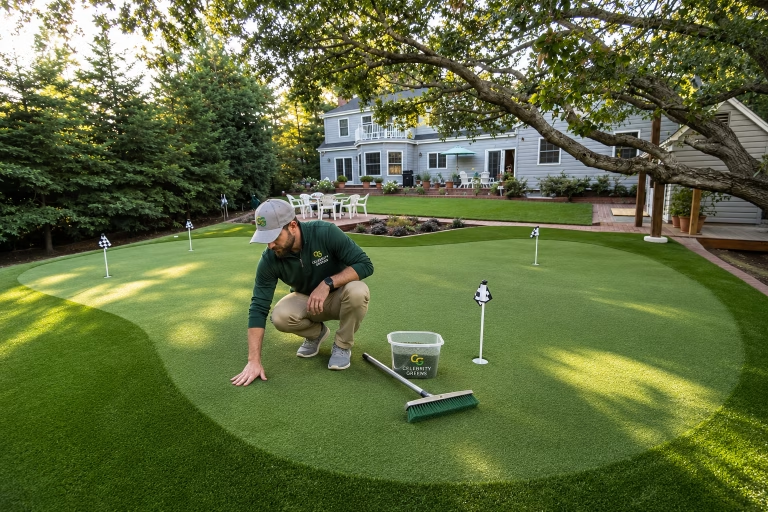
Routine artificial putting green maintenance should include a visual inspection of the entire installation.
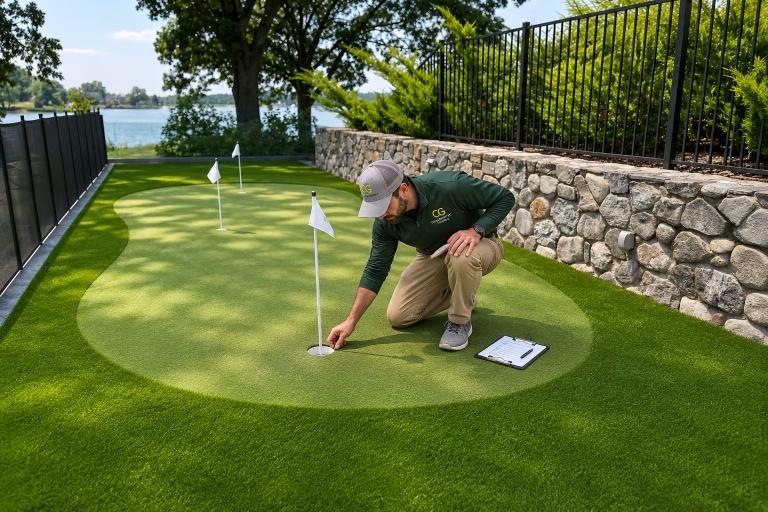
Check around cups for lifting or irregularities. Examine seams for separation and inspect perimeter edges for movement. You should also watch for unusual depressions, raised areas, or changes in contours.
Finding minor issues early can prevent them from developing into larger problems requiring extensive putting green repair.
Step 6: Keep Weeds and Organic Growth Under Control
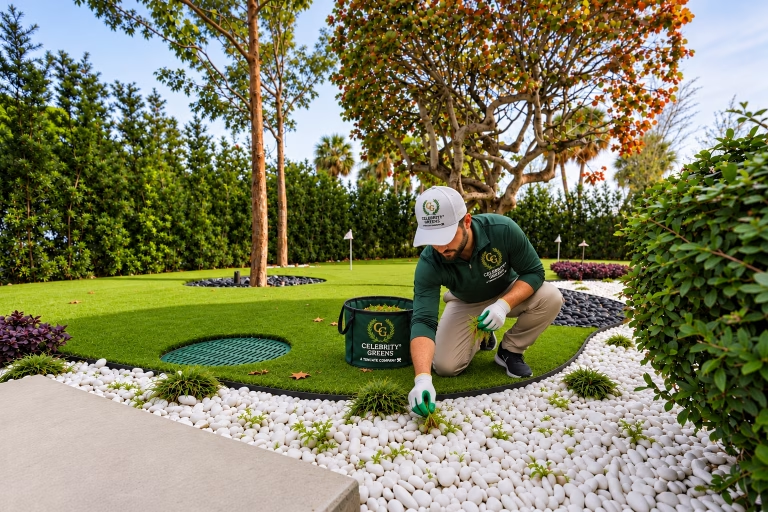
Professionally installed synthetic turf is designed to limit weed growth, but airborne seeds and organic material can occasionally settle into the surface.
Removing leaves and debris regularly helps prevent organic matter from accumulating. If a weed appears, carefully remove it before its root system develops further.
Avoid applying lawn-care chemicals automatically. Products intended for natural grass may not be appropriate for synthetic playing surfaces.
Step 7: Protect the Green from Heavy Objects
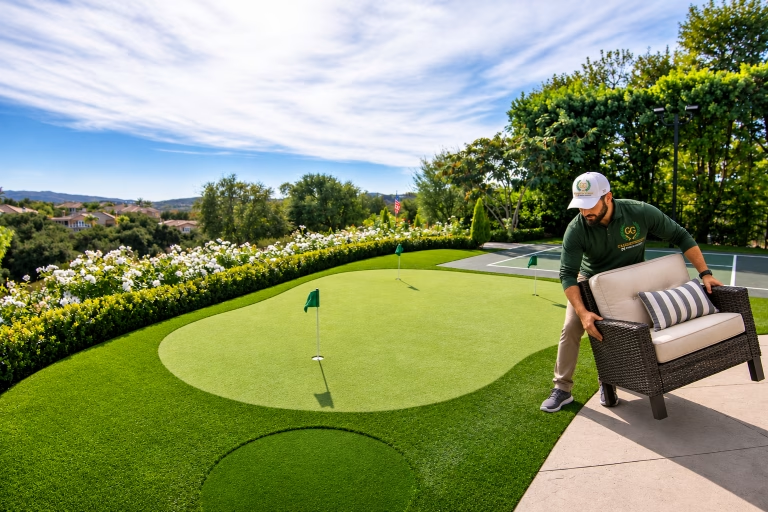
Your putting green is built for golf and normal foot traffic, but placing extremely heavy objects on it for extended periods can compress the turf or affect the underlying surface.
Avoid leaving furniture, equipment, planters, or other heavy items on the putting surface. Sharp objects should also be kept away from the turf.
If you’re hosting an event or temporarily using the surrounding area for another purpose, take precautions to protect the green from unnecessary stress.
Step 8: Monitor How the Green Plays
Golf itself can be one of your best maintenance tools. Pay attention to changes in how putts roll across familiar sections of the green.
Is a putt suddenly moving differently? Has the speed changed noticeably? Does one area seem less consistent?
A high-quality synthetic green is engineered for predictable performance, so changes can signal that the surface needs brushing, cleaning, infill adjustment, or professional inspection.
Monitoring playability makes green maintenance about more than appearance. It helps preserve the golf experience the green was designed to provide.
Step 9: Schedule Professional Maintenance When Needed
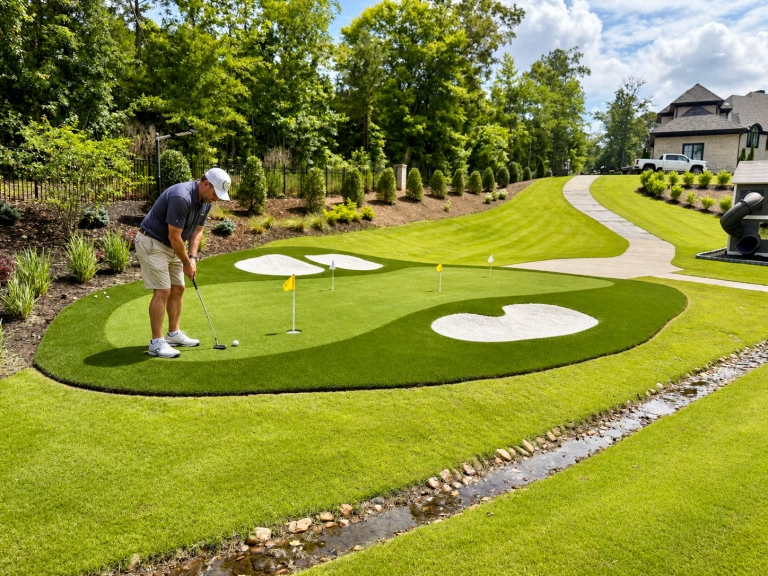
Homeowners can handle most routine cleaning and upkeep themselves, but periodic professional service may help maintain a premium installation.
An experienced turf professional can inspect seams, edges, infill, contours, cups, drainage, and overall surface condition. Specialized equipment can also groom the turf more thoroughly than common household tools.
Professional service is particularly valuable if your green receives heavy use or if you notice changes in appearance or ball performance.